
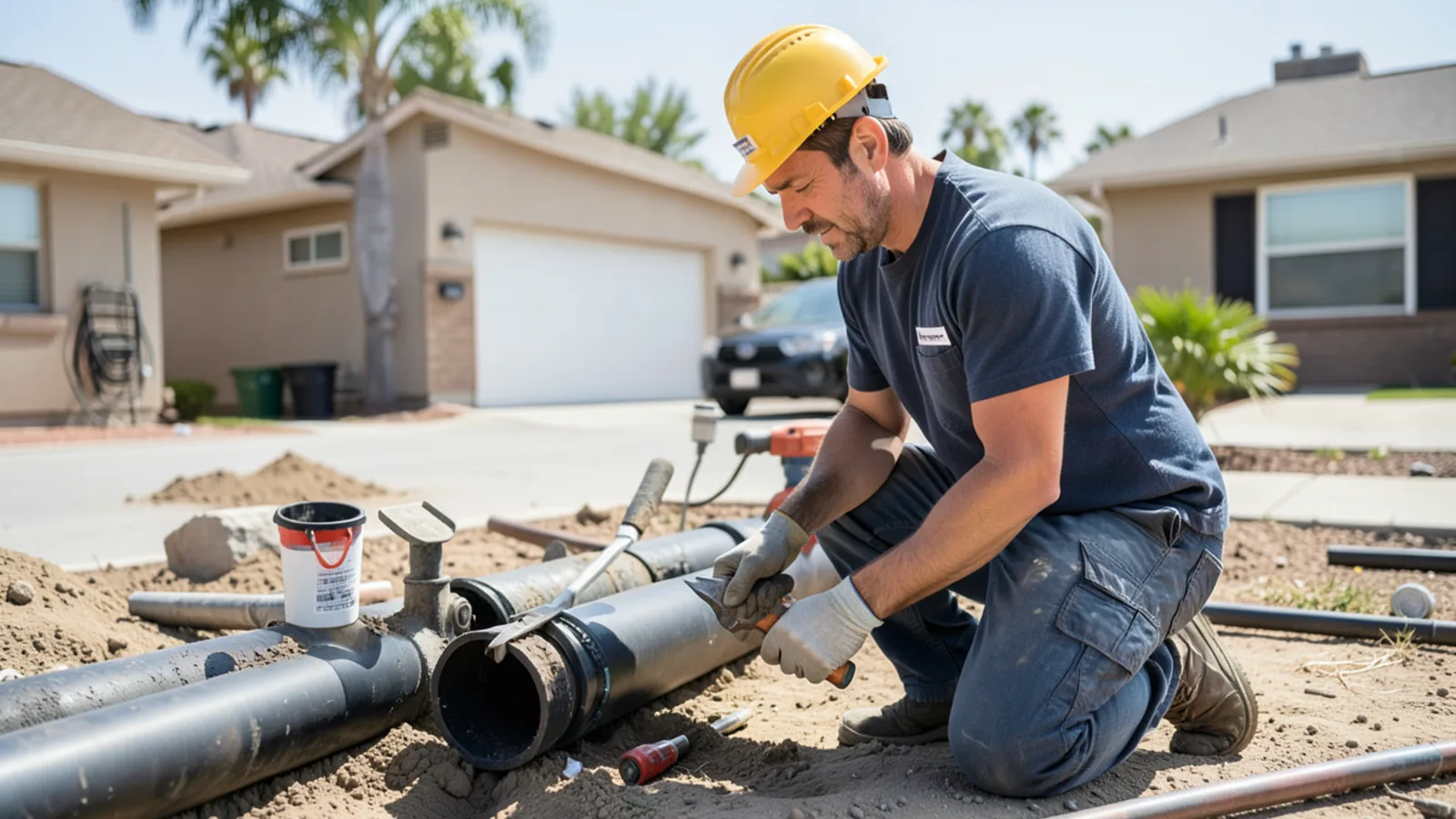
What our sewer line repair and replacement service includes
When an underground sewer lateral fractures, separates, or collapses, our licensed C-36 plumbing contractors deliver comprehensive diagnostic evaluation, precise excavation, and code-certified replacement. Every sewer project dispatched from our Grand Boulevard shop includes: (1) High-definition fiber-optic video push-camera scoping to inspect interior pipe walls; (2) Electromagnetic 512Hz sonde surface tracing to pinpoint line depth and horizontal alignment; (3) Utility marking and DigAlert 811 clearance prior to excavation; (4) Targeted spot excavation or comprehensive whole-lateral replacement from foundation footing to municipal main; (5) Laser-guided grading ensuring a continuous minimum one-quarter-inch per foot gravitational slope; (6) Dual-directional two-way cleanout installation complying with California Plumbing Code Chapter 7; (7) Ten-foot hydrostatic head pressure testing witnessed by City of Corona building inspectors; (8) Mechanical soil backfill compaction in controlled lifts to prevent surface settling.
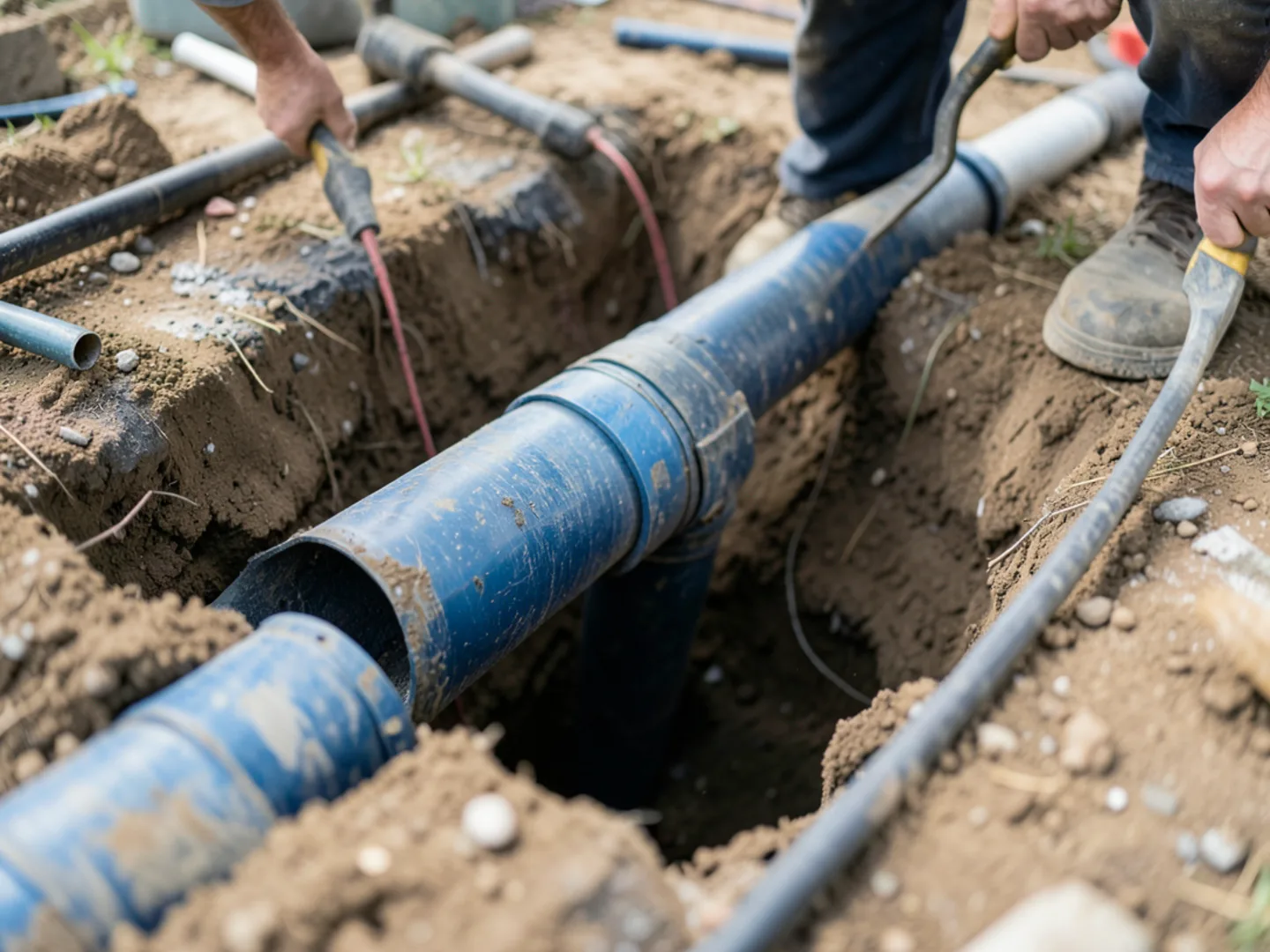
Recognizing sewer line failure in Corona residential properties
A damaged sewer lateral exhibits clear mechanical warning signs long before wastewater pools in your yard. Corona homeowners should watch for these unmistakable indicators: (1) Multiple Fixture Stoppages: When wastewater backs up simultaneously into ground-floor shower pans, bathtubs, and toilets across multiple bathrooms, the failure exists inside the common subterranean lateral rather than individual fixture branches. (2) Chronic Root Intrusions: If your sewer line requires mechanical cable clearing every two to three months, aggressive tree roots have permanently displaced pipe joints, creating structural fractures that snags debris. (3) Yard Depressions and Sewer Gas Odors: Fractured underground pipes leak moisture and sewage into surrounding backfill, causing soil washouts that create sunken depressions in lawns or cracked concrete driveway slabs accompanied by pungent sewer gas smells. (4) Foundation Wall Moisture: In hillside properties across South Corona and Sierra del Oro, cracked sewer lines near foundation footings can allow wastewater to weep through concrete stem walls, generating efflorescence and mold.
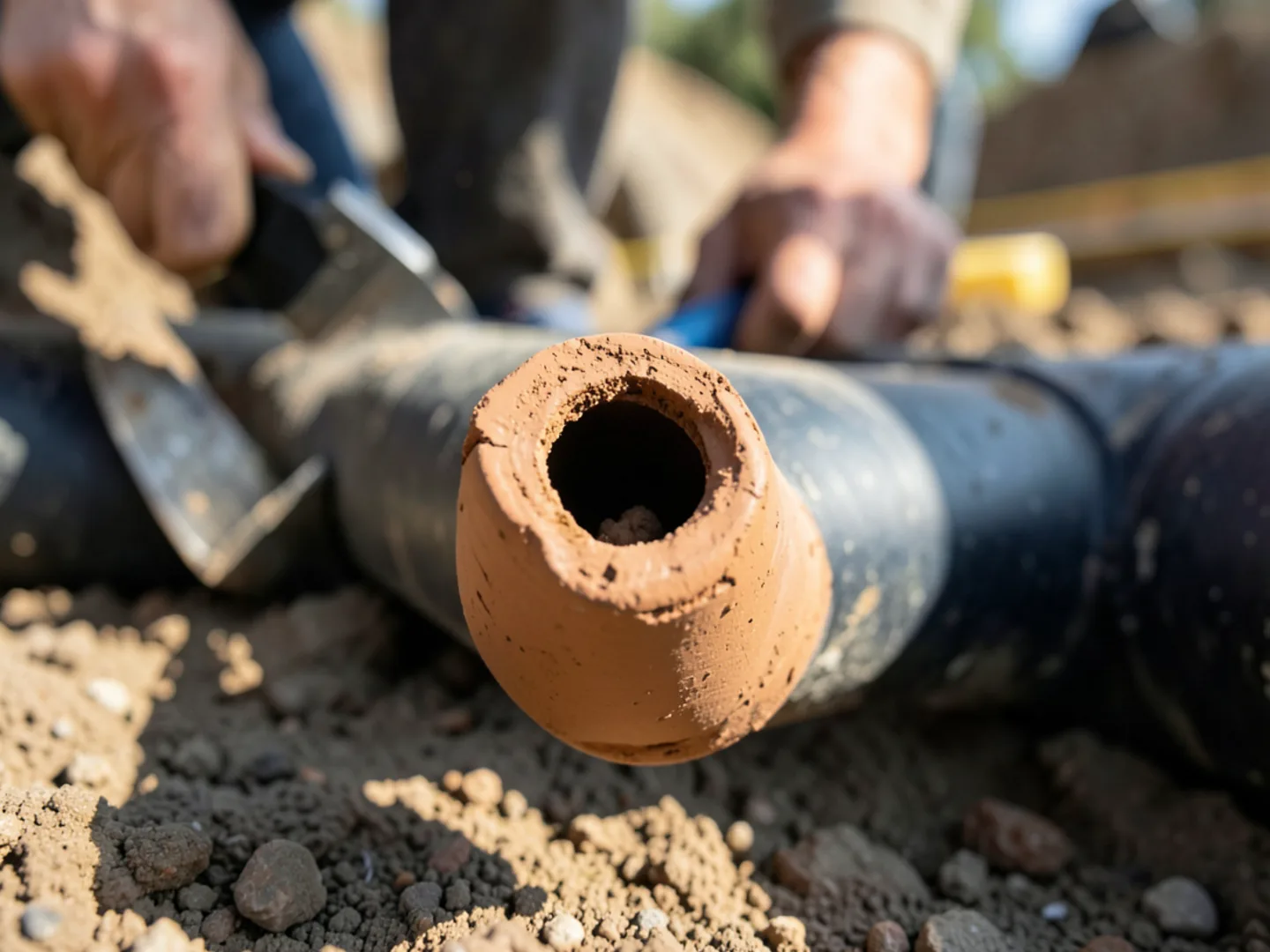
Sewer pipe materials across Corona housing eras and common failure modes
The age of your Corona home largely dictates the mechanical construction and vulnerability of your sewer lateral: First, in historic central Corona and homes constructed prior to 1975 along Grand Boulevard, laterals were predominantly installed using vitrified clay pipe (VCP) joined with mortar or early tar-based seals. Clay pipe is structurally rigid and chemically inert, but brittle bell-and-spigot joints frequently crack under ground settling, allowing eucalyptus and ficus roots to penetrate and shatter pipe hubs. Second, some late-1960s installations feature bitumen-impregnated wood fiber pipe (Orangeburg), which absorbs groundwater over decades, leading to ovalization, blistering, and complete structural collapse. Third, homes built during the 1980s and 1990s housing expansion throughout North Corona and Corona Hills utilized Schedule 40 ABS plastic. While ABS resists root intrusion and chemical corrosion, improper gravel bedding during original tract grading often causes severe sewer bellies (sagging low points) that collect heavy solids and trigger recurring clogs.
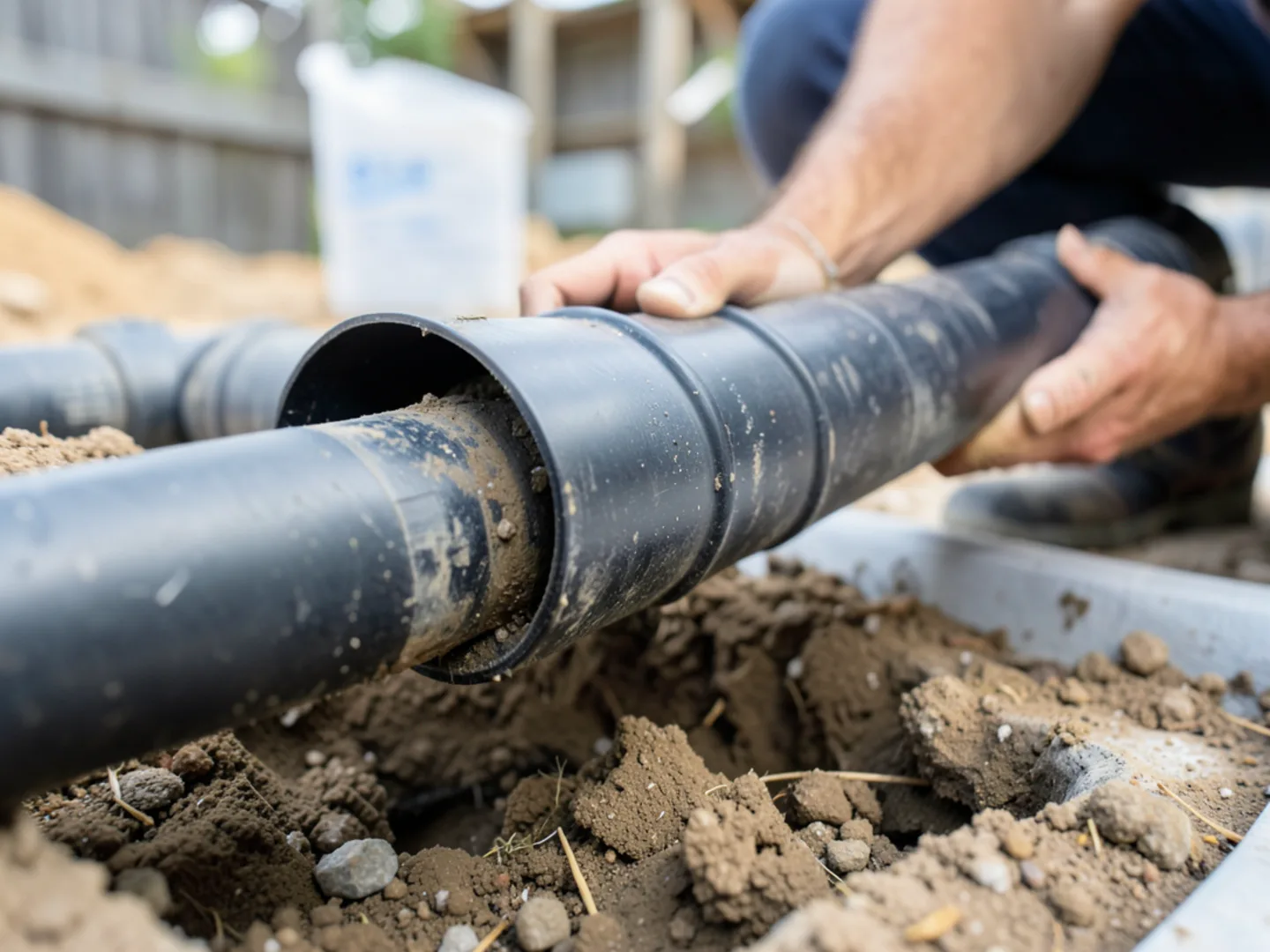
High-definition optical camera diagnosis and underground sonde mapping
We never break ground based on assumptions. Every sewer project begins with an optical push-camera inspection through an existing cleanout riser. Our technicians deploy Ridgid SeeSnake color digital cameras equipped with high-intensity LED arrays and TruSense high-dynamic range sensors. As the camera travels through the lateral, we inspect every pipe joint, measuring the exact linear distance to fractures, root curtains, sheared hubs, or back-pitched bellies. An integrated 512Hz electromagnetic sonde transmitter embedded inside the camera head emits a low-frequency radio signal through soil and concrete. On the surface, our technician tracks this signal using a digital locator, determining the pipe depth to the nearest inch and marking the exact ground location with spray paint. This precision diagnostic allows us to determine whether a modest six-foot spot repair can resolve the issue or if full line replacement is necessary.
Our five-step sewer replacement and repair methodology
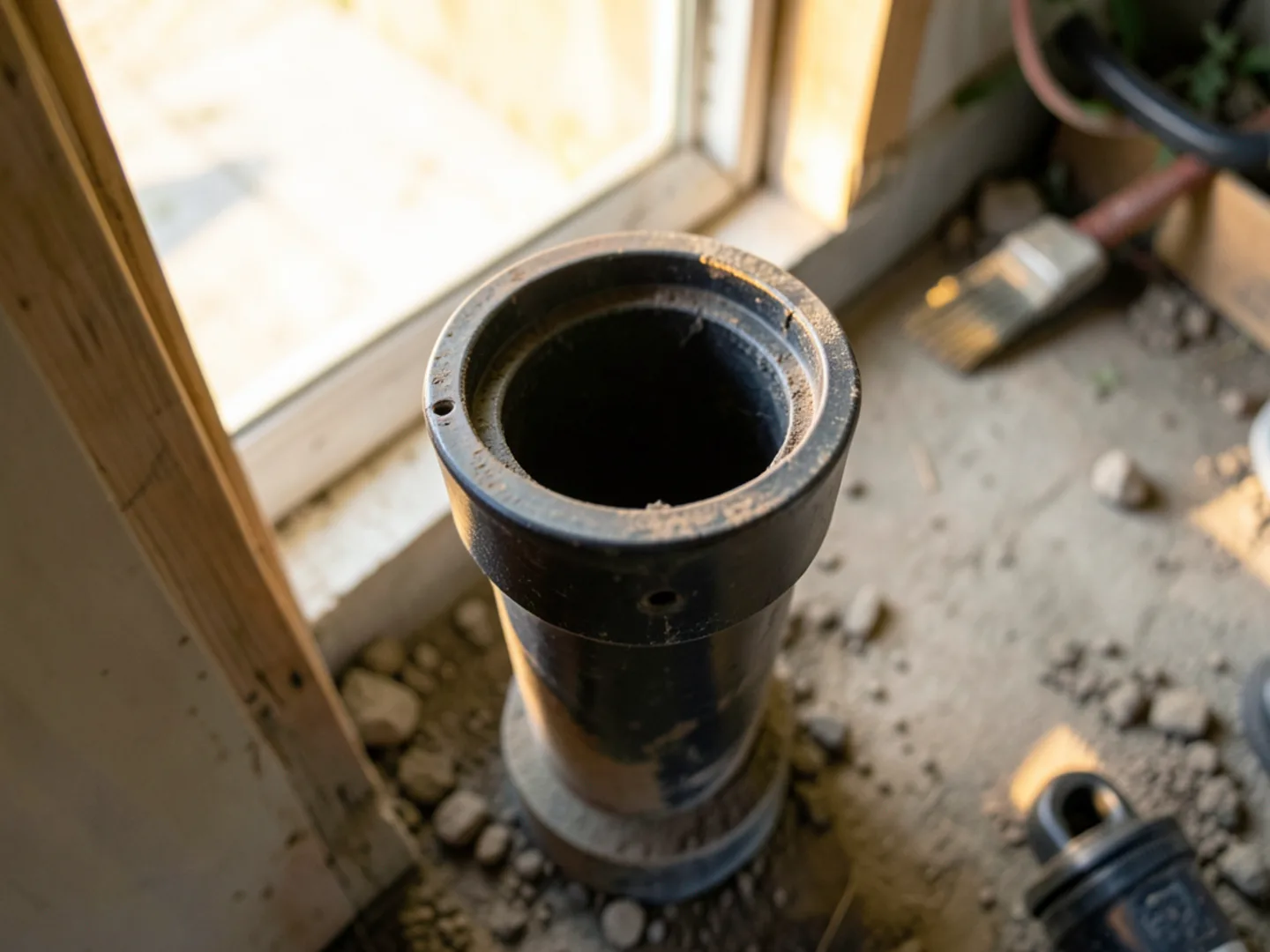
Our licensed technicians execute sewer replacements through an orderly five-stage construction sequence designed to restore dependable gravity drainage: Step 1: Underground Utility Mapping. We notify DigAlert 811 to mark subterranean electrical, gas, and telecommunication infrastructure, laying heavy protective neoprene mats over turf and hardscape. Step 2: Precision Excavation and Shoring. Using mini-excavators and hand trenching, we expose the failed sewer pipe, installing trench shoring boxes where depth exceeds safety thresholds per OSHA standards. Step 3: Bedding and Pipe Installation. We remove the compromised host pipe, level the trench floor, and install a four-inch base of clean crushed stone. We assemble new Schedule 40 ABS or SDR-35 PVC pipe with solvent-welded joints, verifying a uniform minimum one-quarter-inch per foot slope with digital levels. Step 4: Two-Way Cleanout Assembly. We install two-way directional cleanout risers near the foundation wall and property line, outfitting them with protective brass caps for effortless future maintenance. Step 5: Water Testing, Municipal Signoff, and Compaction. We plug the lower lateral and fill the pipe with water to establish a ten-foot standing head pressure test, coordinating on-site inspection with City of Corona building officials before backfilling in compacted six-inch lifts.
Open-trench excavation versus modern trenchless restoration
Depending on surface landscaping, concrete hardscape, and underground pipe pitch, our team evaluates both traditional open-trench replacement and trenchless restoration options: Trenchless pipe lining (CIPP) or pipe bursting is an exceptional solution when the host pipe retains proper gravitational pitch and is located beneath expensive brick paver driveways or mature landscape beds. However, trenchless methods cannot correct pipe bellies, severe reverse grading, or fully collapsed clay pipe sections. When an underground lateral has sagged into a deep belly or lost its downhill pitch, open-trench excavation is mandatory. Traditional trenching allows our crew to remove unstable sub-base soil, place engineered crushed gravel bedding, and mechanically align new pipe sections to restore flawless gravity flow out to the municipal street sewer.
Cost variables for sewer repair versus complete lateral replacement
Sewer repair costs depend on objective site conditions that our technicians detail in a comprehensive written proposal prior to starting excavation: (1) Scope of Work: Excavating a localized six-foot spot repair requires far less machine time and labor than replacing an entire 80-foot lateral running from the foundation to the street curb. (2) Surface Hardscape: Digging through open front yard grass is substantially simpler than saw-cutting and restoring reinforced concrete driveways, asphalt, or decorative masonry walkways. (3) Trench Depth: Excavating a shallow four-foot residential line involves standard trenching, whereas deep eight-to-twelve-foot connections near the municipal sewer main require heavy trench shoring, plate steel covers, and specialized excavation equipment. (4) Municipal Permitting and Encroachment: Projects requiring street cuts or sidewalk access involve City of Corona Public Works encroachment permits, traffic safety control plans, and street restoration bonds.
California plumbing code standards and City of Corona municipal permit requirements
All sewer lateral repairs and replacements in Corona must conform strictly to California Plumbing Code (CPC) Title 24 Part 5, Chapter 7 regulations and municipal building standards. CPC Section 707 mandates that two-way cleanouts must be installed within two feet of the exterior building wall and at the front property line before connecting to the public main. In addition, new drainage lines must maintain a minimum uniform slope of one-quarter inch per foot for four-inch pipe to prevent solids separation. Our licensed C-36 plumbing contractors manage the entire permitting workflow through the City of Corona eTRAKiT portal. We set up official water head tests, coordinate on-site inspection visits with City of Corona building inspectors, and secure formal permit signoffs to protect your property title and insurance coverage.
Need plumbing service in Corona or surrounding communities?
Our central dispatch is stationed on East Grand Boulevard. Whether you are dealing with an urgent leak in South Corona, need sewer diagnostics in Norco, or require water heater replacement in Eastvale, our licensed technicians arrive prepared with complete equipment rigs. Read more about our overall plumber in Corona CA services, or contact our shop at (207) 419-2600.