
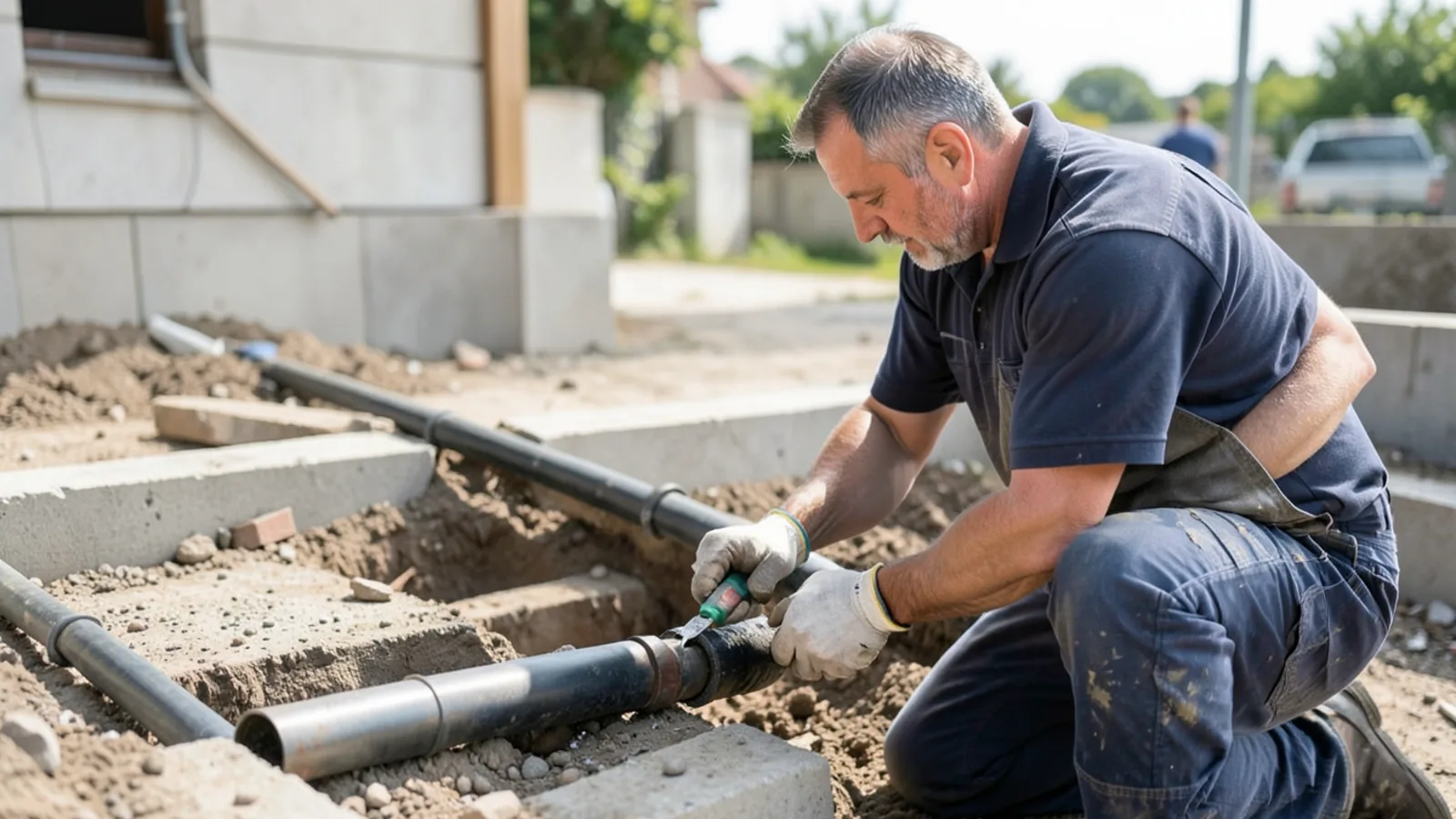
Answer first: overhead PEX reroute vs direct concrete repair
For more than ninety percent of residential slab leak occurrences in Corona and Western Riverside County, an overhead Uponor ProPEX PEX-a attic reroute represents the superior, long-term engineering solution compared to direct concrete jackhammering.A direct slab repair requires destructive demolition: jackhammering through finished tile, hardwood, or carpet, chipping away structural foundation concrete, and soldering a localized patch onto an aged copper line while leaving the remaining thirty to fifty feet of deteriorating pipe buried beneath your home. Conversely, an overhead reroute permanently abandons the compromised underground line, installing continuous, joint-free PEX tubing through attic spaces and interior wall cavities. This restores reliable water pressure with zero flooring destruction, protects structural concrete, and provides a 25-year manufacturer warranty. Direct floor excavation is only recommended when architectural constraints—such as flat tar roofs, exposed beam ceilings without attic crawlspaces, or multi-story mid-floor slabs—physically eliminate overhead routing pathways.
The direct concrete slab repair process and structural drawbacks
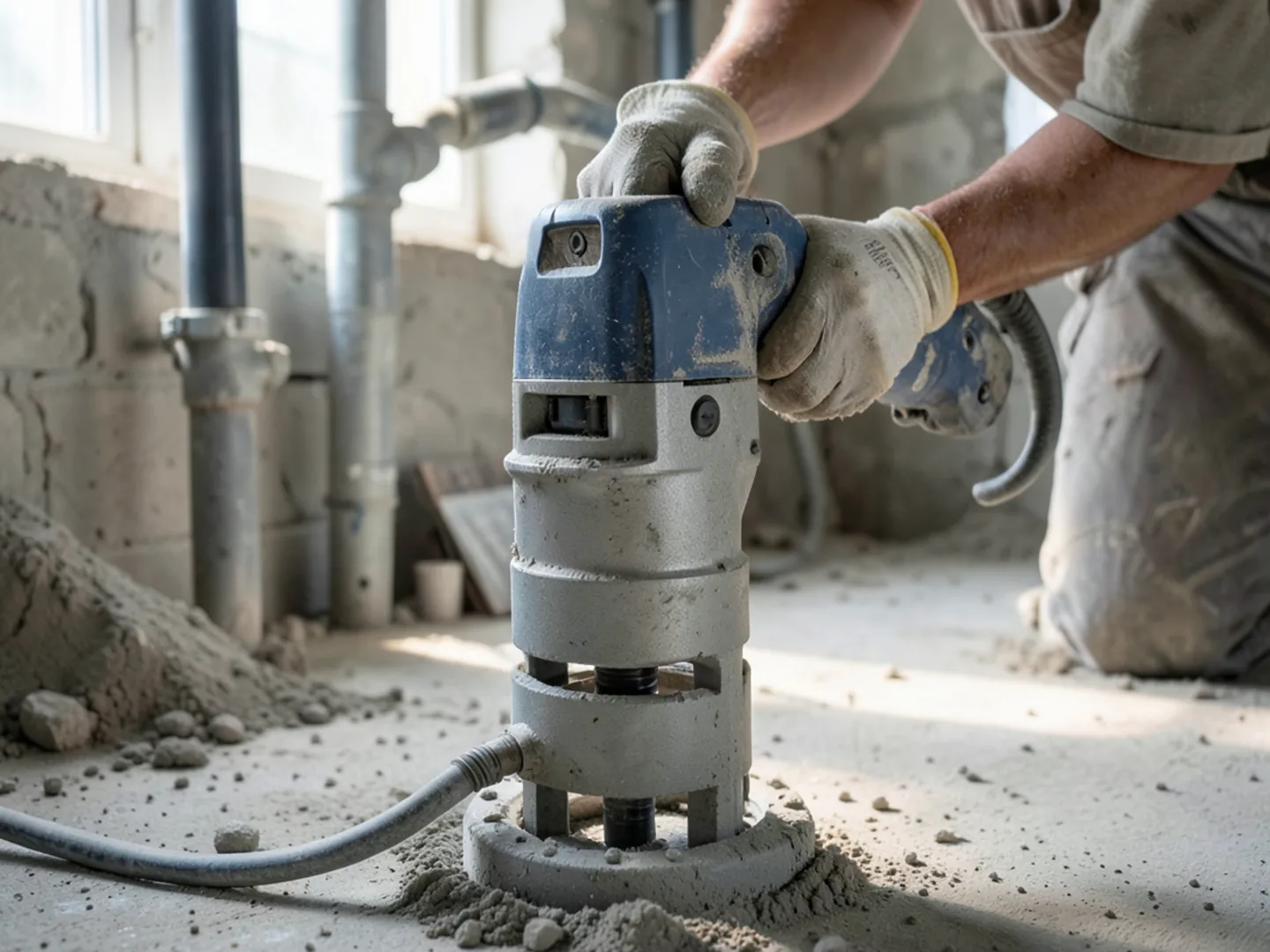
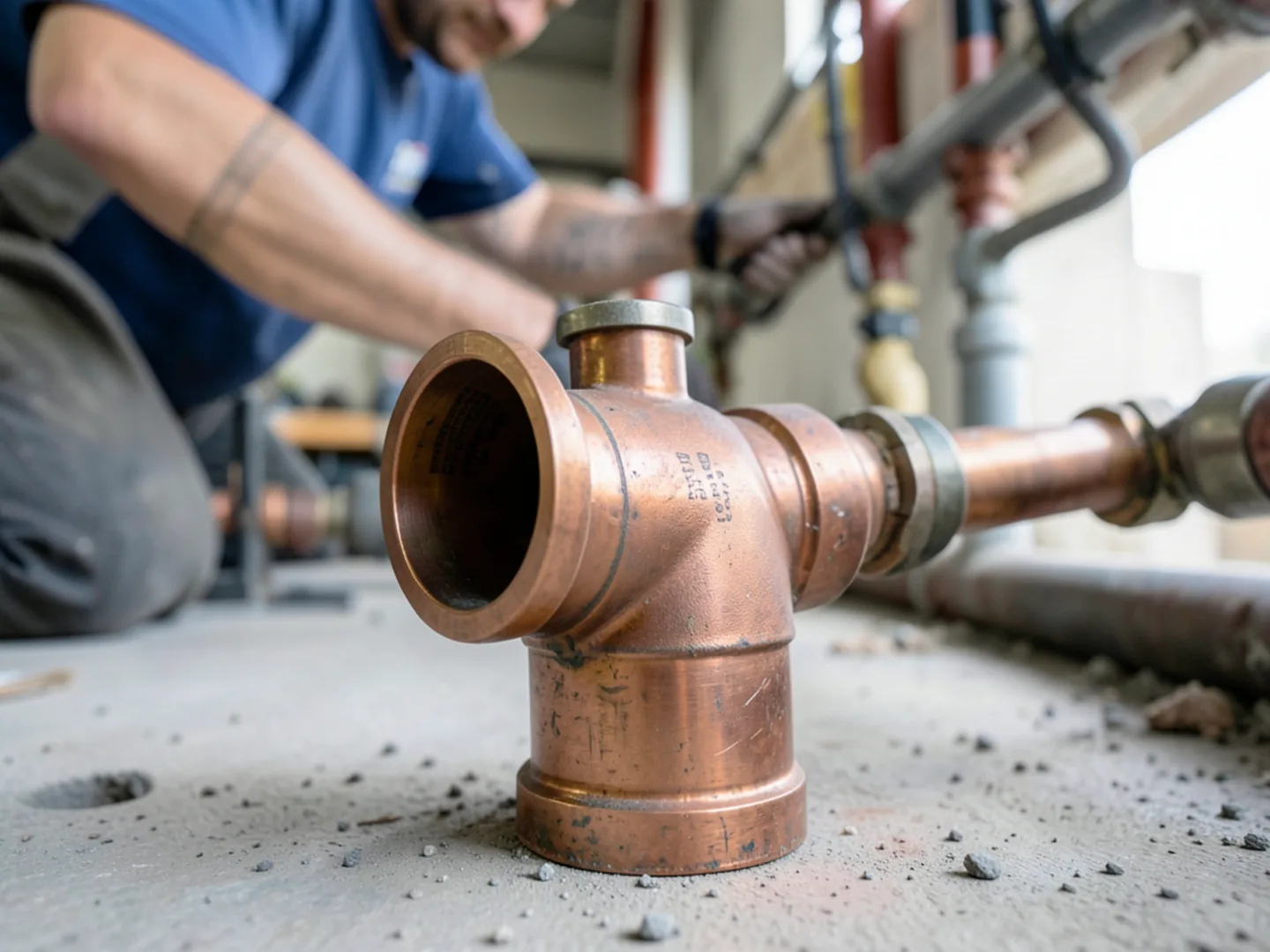
Executing a direct under-slab repair is an invasive, multi-stage construction operation. First, technicians must pull back carpet or chisel away ceramic tile, stone, or glued-down hardwood flooring around the verified acoustic coordinates. Next, using an electric demolition jackhammer, the crew cuts a localized trench through the four-inch to six-inch concrete foundation slab. Because pulverized concrete produces hazardous crystalline silica dust, technicians must establish plastic containment barriers and operate HEPA-filtered negative air machines.Once the failed copper pipe is exposed beneath the concrete and sub-base sand, the technician cuts out the perforated section. A replacement section of heavy-gauge Type L copper is fitted using silver-brazed couplings to resist thermal stress. Under California Plumbing Code Title 24, the newly installed copper must be completely sleeved with closed-cell polyethylene foam insulation or bituminous tape to prevent direct contact with corrosive wet concrete. After pressure testing the brazed joint at 100 PSI, the trench is backfilled with sand and patched with high-strength structural concrete.Despite proper execution, direct repair carries severe inherent liabilities. Percussive vibrations from jackhammering travel along the rigid copper pipe, shocking brittle, calcified solder joints several feet away and frequently causing secondary pinhole leaks within weeks. Furthermore, matching discontinued tiles or blending patched hardwood leaves visible architectural scars that reduce interior home aesthetics.
The overhead PEX-a attic reroute method
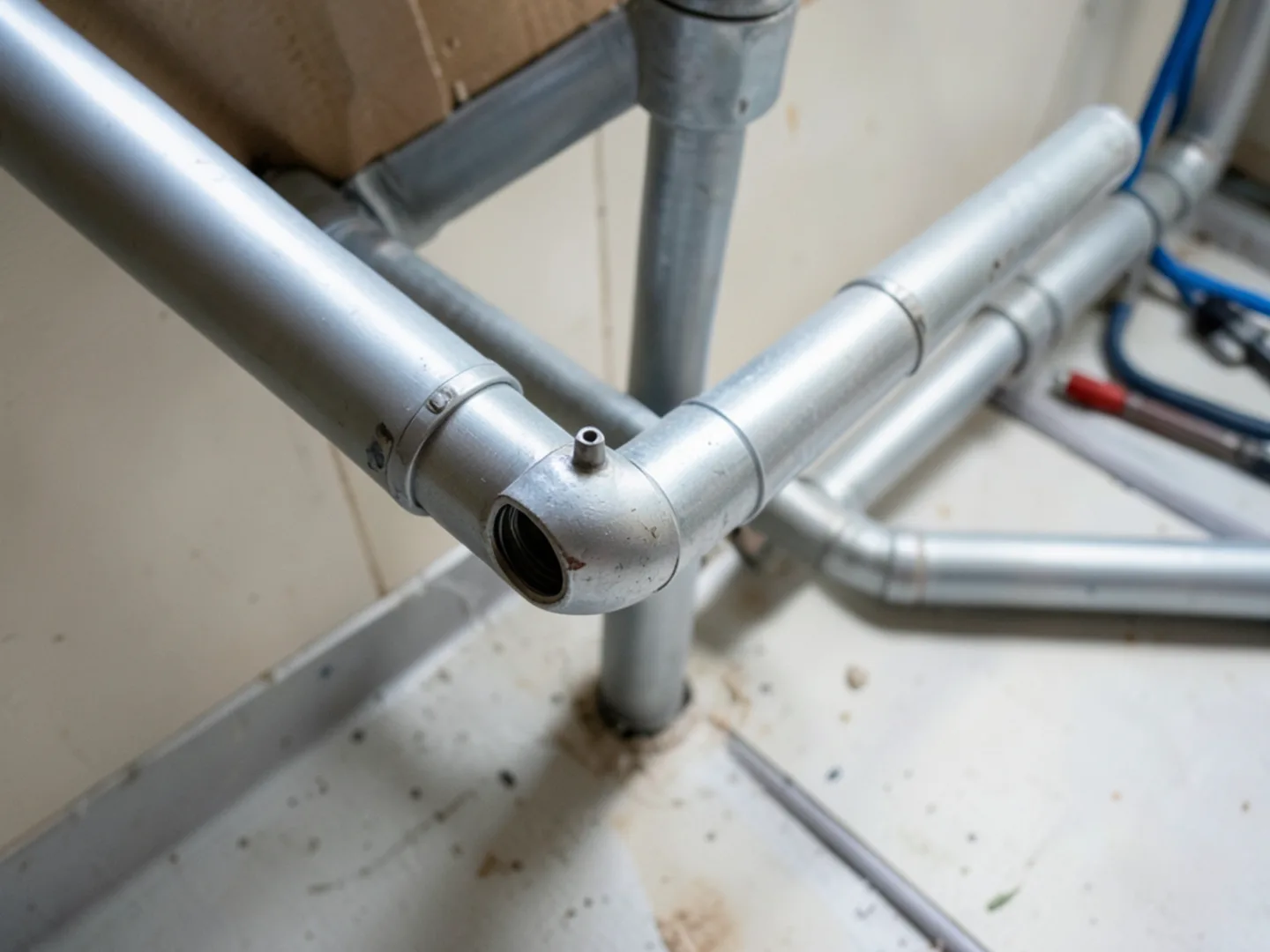
An overhead attic reroute approaches a sub-slab plumbing failure from an entirely different engineering philosophy: rather than attempting to patch aged metal buried in dirt, the defective line is permanently taken out of service.The technician begins by identifying the primary distribution manifold or supply branch feeding the affected fixture group, typically located near the water heater in the garage or inside a downstairs utility closet. The leaking underground copper line is isolated, severed, cleared of residual moisture using compressed air, and sealed at both ends with permanent soldered or mechanical brass caps. The buried pipe remains harmlessly deactivated beneath the concrete foundation.Next, the technician installs a continuous run of cross-linked polyethylene tubing—specifically Uponor ProPEX PEX-a—from the source manifold upward through interior wall cavities, across the attic framing, and down into the target bathroom, kitchen, or laundry room. Because PEX-a is exceptionally flexible, an entire branch line can be installed as a continuous run without any hidden mechanical joints or couplings inside wall or ceiling cavities. PEX-a expander fittings utilize the thermal memory of the tubing to create permanent, leak-proof connections that actually become stronger over time. Once connected to existing fixture supply valves, the new overhead line is pressure-tested and sanitized, restoring water service with minimal disruption.
Comparison table: direct repair vs overhead PEX reroute
To help Corona homeowners evaluate both approaches objectively, the following comparison table outlines the primary operational differences:• Flooring Disruption: - Direct Slab Repair: High. Requires jackhammering through tile, hardwood, laminate, or carpet. - Overhead PEX Reroute: None. Preserves all finished flooring; requires only minor drywall access holes.• Project Timeline: - Direct Slab Repair: 2 to 4 days, including concrete curing and flooring restoration. - Overhead PEX Reroute: 1 single working day (typically 6 to 8 hours from setup to completion).• Future Leak Risk: - Direct Slab Repair: High. The remaining 30+ feet of aged copper pipe remains buried in soil. - Overhead PEX Reroute: Zero. The failing underground line is completely removed from service.• Foundation Impact: - Direct Slab Repair: Breaches structural concrete slab and cuts the under-slab vapor barrier. - Overhead PEX Reroute: 100% preserves concrete foundation integrity and moisture barriers.• Household Cleanliness: - Direct Slab Repair: Significant concrete dust, noise, and flooring debris requiring containment. - Overhead PEX Reroute: Clean, quiet installation with minimal drywall dust cleaned up same-day.• Material Warranty: - Direct Slab Repair: Typically 30 to 90 days limited warranty on the soldered spot patch only. - Overhead PEX Reroute: 25-year manufacturer warranty on Uponor ProPEX PEX-a tubing.
Thermal insulation standards for Inland Empire attic piping
A common concern among Inland Empire homeowners regarding overhead attic piping is thermal exposure. Corona summer temperatures frequently surpass 100 degrees Fahrenheit, causing unconditioned attic spaces to reach extreme temperatures between 130 and 145 degrees. If water lines are routed through an attic without proper thermal protection, cold water taps will dispense uncomfortably hot water for several minutes, while hot water lines will suffer rapid heat loss during cooler winter months.To ensure optimal thermal efficiency, professional installations adhere strictly to California Title 24 energy standards. Every overhead PEX supply line routed through attic framing is encased inside heavy-duty, closed-cell elastomeric foam pipe insulation (such as Armacell Armaflex or Tubolit) with a minimum wall thickness of three-quarters of an inch to one inch. All insulation seams are sealed with vapor-barrier acrylic tape.Additionally, wherever possible, technicians route supply lines beneath existing R-38 blown cellulose or fiberglass attic insulation batts. Burying the insulated pipes beneath the attic thermal blanket shields them from radiant roof heat during hot summer days and prevents freezing exposure during rare winter cold snaps, ensuring consistent water temperatures year-round.
Architectural factors that dictate the repair choice in Corona
While overhead rerouting is the default recommendation for most single-family residences, specific home architecture throughout Corona and Western Riverside County dictates the final mechanical approach:In post-tensioned foundation homes—common in modern master-planned communities across South Corona, Sierra del Oro, and Dos Lagos—breaking the slab carries extreme hazards. Post-tensioned slabs contain high-strength steel cables stretched under thousands of pounds of hydraulic tension. Cutting or nicking an active post-tension cable with a jackhammer can cause explosive structural failure, crack the entire foundation, and inflict fatal injuries. In post-tension homes, building codes strictly mandate non-destructive overhead rerouting.In two-story homes, routing pipes to ground-floor fixtures requires navigating vertical wall chases, closet corners, or ceiling joist spaces between floors. Experienced plumbers utilize mechanical fish tapes and inspection cameras to route flexible PEX tubing down through interior wall cavities with minimal drywall cuts.Direct concrete access is primarily reserved for homes with open beam cathedral ceilings, flat mid-century foam roofs without accessible crawlspaces, or commercial structures with exposed concrete ceilings where overhead routing is physically impossible.
Real estate disclosures and property resale implications
When selling a residential property in California, property owners are legally required under California Civil Code Section 1102 to complete a Real Estate Transfer Disclosure Statement (TDS), documenting any known past or present plumbing defects, material repairs, or foundation settling.A direct concrete spot repair often triggers skepticism from prospective home buyers and professional property inspectors. A visible concrete patch in a foundation, accompanied by mismatched replacement tiles or floorboards, raises immediate red flags about the remaining underground copper piping. Buyers may demand significant repair credits or request invasive hydrostatic pressure testing before closing escrow.By contrast, an overhead PEX reroute documented with a municipal plumbing permit and a professional contractor warranty demonstrates that the compromised underground line was permanently solved. Home buyers, real estate agents, and structural engineers recognize whole-run PEX bypasses as permanent capital improvements that eliminate the threat of future sub-slab water emergencies.
Need professional diagnostics or repairs in Corona?
Our technicians are stationed at 685 E Grand Blvd in Corona. Learn more about our complete plumber in Corona CA capabilities, or call our direct phone line at (207) 419-2600.